
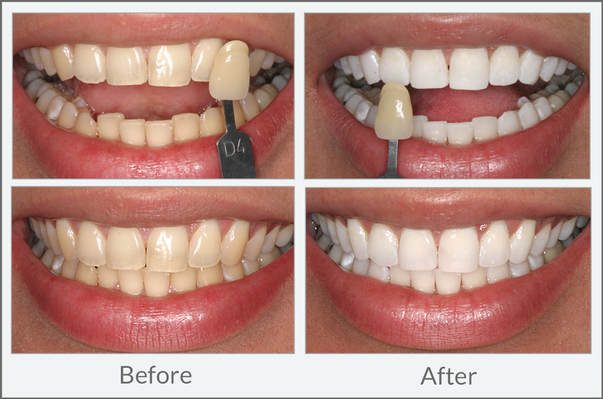
Getting Shade Right Before Whitening Changes Everything
When a patient pursues teeth whitening, the restorations already in their mouth do not change color alongside natural enamel. This creates a clinical challenge that many dentists encounter: a patient completes a whitening protocol, and suddenly existing crowns, veneers, or denture teeth no longer match the surrounding dentition. Understanding how teeth whitening services in Boca Raton interact with lab-fabricated restorations allows dentists to plan cases more deliberately and avoid costly remakes. This article walks through the stages of coordinating whitening treatment with laboratory work, from initial case planning through final shade communication, so that every restoration delivered from the lab integrates seamlessly with the patient's post-whitening smile.
Stage One: Establishing the Whitening Endpoint Before Lab Work Begins
The most reliable way to avoid shade mismatch is to sequence treatment so that whitening is completed before any new restorations are fabricated. This is a straightforward principle, but it requires deliberate scheduling and communication between the clinical team and the dental laboratory. When a dentist in Boca Raton submits a case for crown and bridge, zirconia veneers, or denture teeth selection without first confirming whether the patient plans to whiten, the lab technician has no way of anticipating that the shade will shift. The result is a restoration that matches the pre-whitening dentition but stands out noticeably once the natural teeth brighten. Establishing the whitening endpoint first gives the laboratory a stable, accurate target shade to work from, and it eliminates the guesswork that leads to remakes.
Stage Two: Communicating Shade Accurately to the Laboratory
Once whitening is complete and the shade has stabilized, typically two to three weeks after the final whitening session, the dentist can take a reliable shade reading and submit it to the lab with confidence. Shade communication is one of the most consequential steps in the restorative process, and it deserves careful attention. A written shade designation alone is rarely sufficient for complex cases. Supplementing the shade tab notation with calibrated photographs taken under consistent lighting conditions gives the laboratory technician a far more complete picture of the tooth's translucency, surface texture, and value. At David Gelman's Dental Laboratory in Boca Raton, Florida, CDT-certified technicians use this kind of detailed case documentation to select and characterize materials that reflect the natural optical properties of the surrounding dentition, whether the restoration is a zirconia crown, an E-Max veneer, or a denture tooth from a three-layer premium set.
Stage Three: Selecting the Right Restorative Material for Post-Whitening Cases
Material selection becomes especially important when the target shade falls in the lighter range that whitening typically produces. Highly bleached shades can be challenging to replicate in certain ceramic systems because the material must achieve high value without appearing opaque or artificial. Zirconia and E-Max are both capable of producing restorations in these lighter shade ranges, but the specific formulation, layering approach, and staining technique all influence the final result. Dentists who communicate not just the shade designation but also the character of the surrounding teeth, including any remaining translucency at the incisal edge or subtle surface texture, give the laboratory the information needed to produce a restoration that integrates naturally. This level of detail in case submission is what separates a predictable outcome from one that requires adjustment at the seat appointment.
Stage Four: Planning Implant and Removable Cases Around Whitening Timelines
The shade-sequencing principle applies equally to implant-supported restorations and removable prostheses. For a patient receiving an implant-supported hybrid denture or a full immediate denture, the selection of denture teeth must reflect the shade the patient will ultimately present. If whitening is part of the patient's treatment plan, that information should be factored into the prosthetic design from the outset. David Gelman's Dental Laboratory works with dentists on complex removable cases, including large immediates and cases involving significant bone loss, and the team is accustomed to consulting on sequencing questions that affect the final esthetic outcome. Bringing the laboratory into the conversation early, rather than treating shade selection as a last-minute detail, consistently produces better results for the patient and fewer complications for the dentist.
Coordinated Planning Produces Restorations That Hold Up After Whitening
Teeth whitening services in Boca Raton are widely available, and patients increasingly arrive at restorative appointments with whitening already on their minds or already in progress. The dentists who navigate this most successfully are those who treat whitening as a variable in the restorative plan rather than an afterthought. By completing whitening before lab work is initiated, communicating shade with thorough photographic documentation, selecting materials appropriate to the post-whitening shade range, and involving the laboratory early in complex implant and removable cases, dentists can deliver restorations that remain esthetically consistent over time. A well-coordinated case is the foundation of a result that both the clinician and the patient can rely on.
Frequently Asked Questions
How long should a patient wait after whitening before the dentist takes a shade for the laboratory?
Most clinicians recommend waiting at least two to three weeks after the final whitening session before recording a definitive shade. During this period the tooth shade stabilizes as the enamel rehydrates, which gives a more accurate and lasting color reading for the laboratory to work from.
Can the laboratory match a restoration to a very light post-whitening shade?
Yes, but it requires careful material selection and detailed shade communication. Zirconia and E-Max systems can achieve high-value, lighter shades effectively when the technician receives accurate shade documentation including photographs. Submitting only a shade tab designation without supporting images makes this more difficult, particularly at the lighter end of the shade range.
Does this shade-sequencing approach apply to full denture cases as well as crown and bridge?
It applies to any restoration where the selected tooth shade needs to harmonize with the patient's natural dentition or a planned esthetic result. For full denture cases, including immediate dentures, the denture tooth shade should reflect the patient's intended post-whitening appearance, which makes early case planning and laboratory consultation especially valuable.
Partner With a Laboratory That Prioritizes Case Planning
David Gelman's Dental Laboratory in Boca Raton, Florida, works closely with dentists to ensure that every restoration is planned and fabricated with the full clinical picture in mind. If you have questions about shade sequencing, material selection, or coordinating whitening timelines with laboratory work, our team is available to consult on your case before submission.