Understanding Your Crown Fabrication Options
When it comes to dental crown fabrication in Boca Raton, the material you select on behalf of your patient has a direct bearing on longevity, aesthetics, and the precision of the final restoration. With zirconia, lithium disilicate (E-Max), and porcelain-fused-to-metal (PFM) all remaining viable options in contemporary restorative dentistry, the decision is rarely straightforward. Each material carries distinct mechanical properties, esthetic potential, and laboratory processing requirements that affect how a case should be planned and communicated to the lab. This article outlines the key considerations that help clinicians make informed material selections and work more effectively with their dental laboratory partner.
Zirconia Crowns: Strength, Versatility, and CAD/CAM Precision
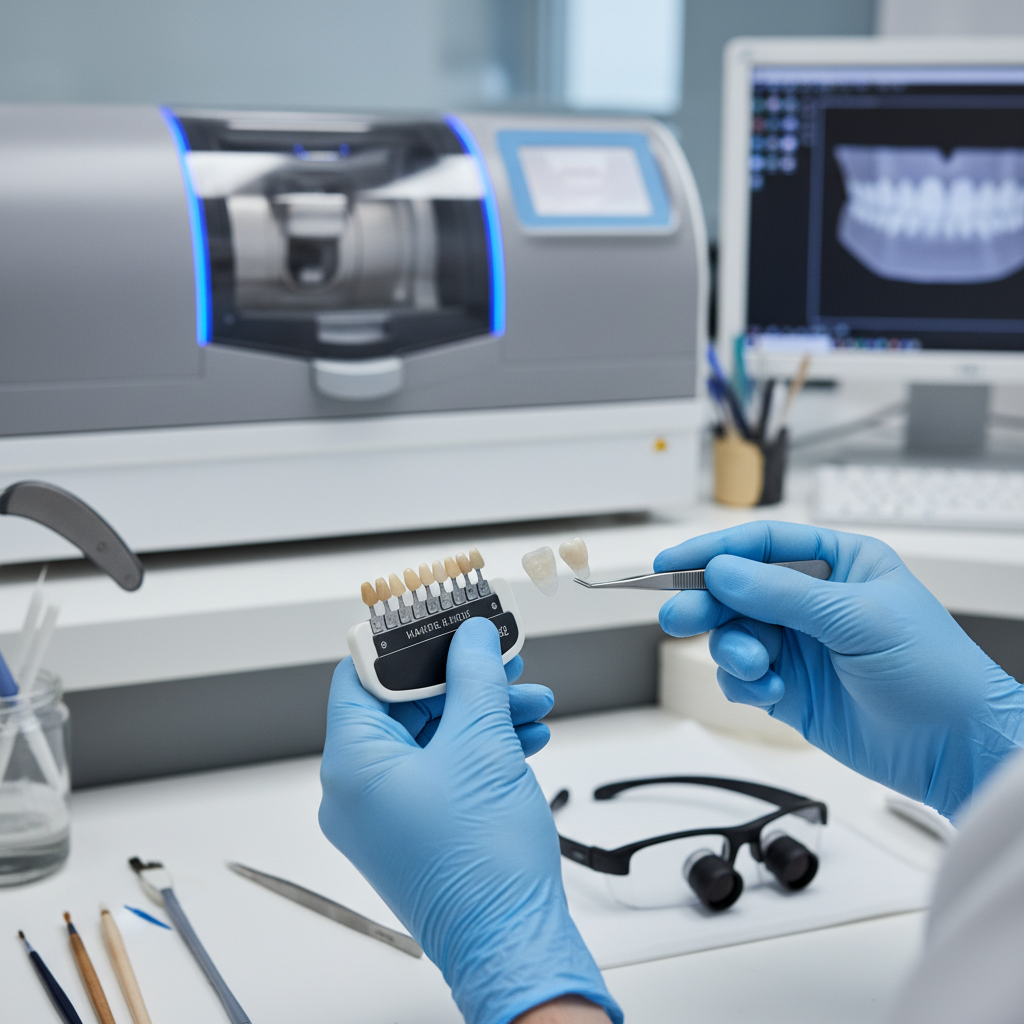
Zirconia has become one of the most widely prescribed crown materials in recent years, and for good reason. Its flexural strength far exceeds that of traditional ceramics, making it well-suited for posterior restorations where occlusal forces are greatest. At David Gelman's Dental Laboratory, zirconia crowns are fabricated using CAD/CAM technology entirely on premises, which allows for precise marginal adaptation and consistent results across cases. Monolithic zirconia is particularly appropriate when interocclusal space is limited or when a patient presents with a history of bruxism, since the material resists fracture under heavy loading. Layered zirconia, by contrast, incorporates a feldspathic porcelain overlay on the facial surface to improve translucency and shade matching in the anterior region. The trade-off is that layered restorations carry a slightly higher risk of chipping over time compared to their monolithic counterparts. Communicating the patient's occlusal habits and esthetic expectations clearly when submitting the case allows the laboratory to determine which zirconia configuration is most appropriate.
E-Max Crowns and Veneers: Esthetics and Translucency in the Anterior Zone
Lithium disilicate, commonly known by the IPS e.max brand name, occupies a distinct position in the restorative material hierarchy. Its optical properties — particularly its ability to mimic the natural translucency and depth of enamel — make it the preferred choice for anterior crowns and veneers where esthetic demands are high. E-Max restorations are pressed or milled and then characterized and glazed by the technician to achieve lifelike shade gradation. For dentists practicing in Boca Raton, where patients frequently present with high cosmetic expectations, E-Max offers a reliable pathway to natural-looking outcomes when the case is planned and executed with care. The material does have mechanical limitations relative to zirconia. Flexural strength, while adequate for anterior and premolar applications, makes full-coverage E-Max crowns a less predictable choice in the posterior region under heavy occlusal loading. When a patient requires a crown on a second molar or presents with parafunctional habits, zirconia is generally the more conservative recommendation. Shade communication between the clinician and the laboratory is particularly important with E-Max, since the final appearance depends heavily on the underlying tooth preparation shade and the cement opacity selected.
PFM Restorations: When Metal Substructure Remains Clinically Relevant
Porcelain-fused-to-metal crowns have a long clinical track record and, despite the rise of all-ceramic alternatives, continue to serve a meaningful role in specific clinical scenarios. The metal substructure provides a level of marginal fit and structural integrity that remains difficult to replicate in all-ceramic systems under certain conditions, particularly in long-span bridges or cases involving compromised preparation geometry. PFM restorations are also a practical consideration when cost is a significant factor for the patient, since the material and fabrication process can be more economical than full-ceramic alternatives. The primary esthetic limitation of PFM is the potential for a dark line at the gingival margin as tissue recedes over time, which makes it a less ideal choice for high-smile-line anterior cases. In posterior applications where the restoration is not prominently visible, this concern is largely moot. Crown and bridge fabrication at David Gelman's Dental Laboratory includes PFM as part of a full-service offering, ensuring that clinicians have access to the appropriate restoration type based on the clinical and patient-specific demands of each case rather than being limited to a single material pathway.
Case Planning and Lab Communication in Boca Raton
Regardless of material selection, the quality of a crown restoration is substantially influenced by the quality of information exchanged between the dentist and the laboratory. Accurate impressions or digital scans, clear shade documentation, photographs of the adjacent dentition, and notes on the patient's occlusal scheme all contribute to a more predictable outcome. At David Gelman's Dental Laboratory, located in Boca Raton, the team emphasizes collaborative case planning as a core part of the workflow. CDT-certified technicians review incoming cases with attention to the clinical context, and the laboratory is available for consultation when a case presents unusual complexity. Dentists who take the time to communicate preparation depth, occlusal clearance measurements, and esthetic goals in writing give the laboratory the information needed to fabricate a restoration that fits accurately and meets the patient's expectations at delivery. This kind of structured communication reduces remakes, shortens chair time, and ultimately supports better patient outcomes.
Matching the Right Crown Material to the Right Case
Zirconia, E-Max, and PFM each occupy a legitimate place in a well-rounded restorative practice, and the decision between them should be driven by the clinical demands of the individual case rather than habit or convenience. Posterior strength requirements, anterior esthetic goals, occlusal loading patterns, and preparation geometry all factor into a sound material selection. Working with a dental laboratory that fabricates all three options on premises and maintains open lines of communication throughout the process gives clinicians in Boca Raton and the surrounding area a meaningful advantage in delivering consistent, high-quality crown restorations.
Frequently Asked Questions
What is the difference between monolithic and layered zirconia crowns?
Monolithic zirconia crowns are milled from a single block of zirconia without a porcelain overlay, making them highly resistant to fracture and well-suited for posterior applications. Layered zirconia incorporates a feldspathic porcelain layer on the facial surface to improve translucency and esthetic detail, which is beneficial in anterior cases but introduces a slightly higher risk of chipping over time.
When is E-Max a better choice than zirconia for a crown?
E-Max is generally preferred in anterior and premolar positions where esthetic demands are high and occlusal loading is moderate. Its translucency and ability to mimic natural tooth structure make it well-suited for cases where a lifelike appearance is the primary goal. Zirconia is typically the stronger choice for posterior teeth or patients with parafunctional habits.
How should I communicate shade information to the laboratory for an E-Max restoration?
Shade communication for E-Max restorations should include the preparation shade in addition to the desired final shade, since the underlying tooth color influences the optical result through the ceramic. Photographs of the adjacent dentition taken under consistent lighting conditions, along with notes on the cement opacity you plan to use, give the laboratory the context needed to characterize the restoration accurately.
Partner with a Laboratory That Knows Crown Fabrication
David Gelman's Dental Laboratory in Boca Raton fabricates zirconia, E-Max, and PFM crowns entirely on premises using CAD/CAM technology and CDT-certified craftsmanship. If you have a complex case or want to discuss material selection before submitting, our team is available for consultation.